(I don't blog much about my authors' books while
they're in-progress toward publication. In part, this is out of respect for the
writing/editing/revising/ publication process: a lot can change for a story as
we work on it. It's also out of respect for readers—because I think it's mean
to taunt you with tales of fantastic books you can't yet buy! Thus this series
of publication-day "Editorial Love Story" posts was born: to
celebrate the fact that, at long last, an author's book is out on shelves, and
to offer a glimpse of each book's
unique "making-of" story. I hope you'll enjoy and be inspired by
this post, and that you'll soon have a chance to read this great book, or
share it with a reader who might enjoy it! |
| The impossible was just the beginning. Now in their second year as superhuman government weapons-in-training at the Pentagonal Spire, Tom Raines and his friends are mid-level cadets in the elite combat corps known as the Intrasolar Forces. But as training intensifies and a moment arrives that could make or break his entire career, Tom’s loyalties are again put to the test. Encouraged to betray his ideals and friendships for the sake of his country, Tom is convinced there must be another way. And the more aware he becomes of the corruption surrounding him, the more determined he becomes to fight it, even if he sabotages his own future in the process. Drawn into a power struggle more dramatic than he has ever faced before, Tom stays a hyperintelligent step ahead of everyone, like the exceptional gamer he is—or so he believes. But when he learns that he and his friends have unwittingly made the most grievous error imaginable, Tom must find a way to outwit an enemy so nefarious that victory seems hopeless. Will his idealism and bravado cost him everything—and everyone that matters to him? Filled with action and intelligence, camaraderie and humor, the second book in S.J. Kincaid’s futuristic World War III Insignia trilogy continues to explore fascinating and timely questions about power, politics, technology, loyalty, and friendship. VORTEX is out today! Those of you who have already read the first book are surely celebrating; those of you who are new to the series have something wonderful in store for you. Just like the taglines ("Beyond The Impossible," and "The Impossible Was Just the Beginning") on her books, S. J. Kincaid has achieved the nearly impossible: she's written a second book in a series that's inarguably even stronger than the first. And I'm not the only one who thinks so! The impossibly-hard-to-please Kirkus Reviews had this to say about VORTEX in a starred review: "Kincaid lays a lot down, twining her increasingly complex plot and characterizations with Tom’s growing awareness. Action fans, fear not: For all the deep thinking Tom and readers undertake, pace, adventure and fun are not compromised one whit. A surprisingly and satisfyingly rich middle volume.” Shelley's books are masterful feats of imagination--and as an editor and as a reader alike, I am in awe of the way she so casually carries around entire galaxies in her mind! The INSIGNIA series is spot-on in its characterizations; phenomenally creative in its plotting and world-building, and startlingly vivid and alarming in its insights of how the near-future could unfold. INSIGNIA and VORTEX (and the prequel novella, ALLIES) are also some of the most genuinely humorous YA books in the market today, I think. Her characters are intensely real: full of the awkward mishaps, bumbling idiocies, and gleeful pranks of early teen life, but also acutely sensitive; occasionally flawed; deeply concerned with justice; and truly devoted to one another. In short, Tom and his comrades Vik, Wyatt, and Medusa, are characters that are so alive that I want nothing more than to be friends with them. For the last year, as Shelley and I worked on the manuscript that would become VORTEX, Tom & Co have made me repeatedly laugh to the point of snorting/choking in coffee shops and on airplanes and at my desk and on the subway, much to the confusion and consternation of strangers sitting beside me. Each time a new chunk of the story, or a revision, would pop into my inbox, I'd find myself grinning with delight. You know that feeling, when you're a kid and it's the first day back at school after a long summer and you get the first glimpses of everyone you haven't seen in weeks and months? VORTEX is a little like that. It makes me bubble over with excitement and glee and the thrilling sensation of "Hey, look, it's all my friends! We finally get to hang out together again and I don't know what exactly what we'll be doing, or what all's going to happen, but I just know it is going to be SO MUCH FUN!" That Shelley can offer readers so much fun while also giving them profound geopolitical commentary and incredible plot twists and meaningful emotional development is just further proof that she's written a second novel that's deserving of rich praise and "favorite book" status. So how can you help celebrate the publication of VORTEX? You can order a copy, for yourself or a sci-fi lover or gamer in your life (note: guys and girls both love this series), or request a copy at your local library. You can follow the author on Twitter (and wish her a happy book birthday!) or check out her website, or follow the series on Facebook. If you've read and enjoyed INSIGNIA, you can help spread the word to fellow readers by getting a copy into their hands (note: INSIGNIA is newly-available in paperback) or by sending them the link to the Browse Inside sample. You can download a copy of ALLIES, the prequel novella to the series if you haven't already done so. And this week, you can join other book lovers in the Epic Reads Re-Readathon of INSIGNIA http://www.pitchdark.com/blog/join-the-insignia-re-read-a-thon/ in preparation for VORTEX--a great way not only to celebrate a fabulous book series but also to meet other avid readers--who knows, perhaps a friendship as great as Tom-Vik-Yuri-and-Wyatt's could emerge!
Happy book birthday to VORTEX, Shelley! Thank you for the "impossibly" wonderful INSIGNIA and VORTEX and ALLIES--the world of books is much richer for your stories and characters, and I feel so privileged to be a part of the process that brings them into the world!
|
Showing posts with label YA. Show all posts
Showing posts with label YA. Show all posts
Tuesday, July 2, 2013
VORTEX: An Editorial Love Story

Tuesday, May 28, 2013
WILD AWAKE: An Editorial Love Story
(I don't blog much
about my authors' books while they're in-progress toward publication. In part,
this is out of respect for the writing/editing/revising/ publication process: a
lot can change for a story as we work on it. It's also out of respect for readers—because I think it's
mean to taunt you with tales of fantastic books you can't yet buy! Thus this
series of publication-day "Editorial Love Story" posts was born: to
celebrate the fact that, at long last, an author's book is out on shelves, and
to offer a glimpse of each book's
unique "making-of" story. I hope you'll enjoy and be inspired by
this post, and that you'll soon have a chance to read this great book, or
share it with a reader who you think might like it!)
 |
Things you earnestly believe will happen while
your parents are away:
1. You will remember to water
the azaleas. 2. You will take detailed, accurate messages. 3. You will call your older brother, Denny, if
even the slightest thing goes wrong. 4. You and your best friend/bandmate Lukas will
win Battle of the Bands. 5. Amid the thrill of victory, Lukas will
finally realize you are the girl of his dreams.
Things that
actually happen:
1. A stranger calls who says
he knew your sister. 2. He says he has her stuff. 3. What stuff? Her stuff. 4. You tell him your parents won’t be able to— 5. Sukey died five years ago; can’t he— 6. You pick up a pen. 7. You scribble down the address. 8. You get on your bike and go.9. Things . . . get a little crazy after that.*
*also, you fall in love, but not with Lukas.
Both exhilarating and wrenching, Hilary T.
Smith’s debut novel captures the messy glory of being alive, as seventeen-year-old
Kiri Byrd discovers love, loss, chaos, and murder woven into a summer of music,
madness, piercing heartbreak, and intoxicating joy.
|
This editorial love story post--and it’s a long one!--is about connections. One of the most amazing parts of being an editor
(and I suspect it’s much the same as a writer or artist of any sort) is that
the ideas and experiences that intrigue/fascinate/perplex you inevitably find
their way into the art that you help shepherd into the world. Which is kind of
the point of my job, really: it’s when a book connects with you as an editor that you, in
turn, ask yourself if you can see it doing so on a larger scale, for thousands
of other readers, too. If the connections the story has captured are
vivid and new enough that they’ll seem as magnificent to the whole reading world as
they did to you.
***
It’s 1997, the start of my sophomore year of college. After
a year of living with a horrid assigned roommate (seriously, the only thing we had in
common was that we had the same first name), I’m finally living with a friend,
in a dorm room in a cool building near all our other friends. We’re no longer clueless freshman. It’s
going to be great.
And it is, at first. But partway through the year, something
unexpected happens. Almost overnight, my roommate unravels in front of my eyes.
At first I just think she’s being annoying; that she’s being weird; that maybe
she’s been drinking too much or is enamored with some odd guy or is trying on
new personalities the way you kind-of do in college, and that’s why she’s
acting strangely. But then it intensifies. She doesn’t sleep. She
hallucinates. She talks about meeting people I know she’s never met, but she believes
these encounters like they are real. When I leave our dorm room for class, I
come back to increasingly bizarre scenarios. My friends and family recount confusing stories, outright crazy lies
they’ve heard from her when she’s answered our phone. She’s losing weight,
rapidly. My R.A. is no help, so finally a friend and I call her parents. They
swoop in, take her home for a weekend, and return her to a few days later, announcing
that she just needed more rest, and a good family dinner. They suggest that
maybe we’re not a good match as roommates and she’ll move into a single room next semester.
My roommate’s only been back for a week when her off-kilter
behavior turns downright scary. This time my R.A. listens, sees the signs. We
call her parents together. They swoop in again, this time taking her and all of her things home in one afternoon. This time, she doesn’t come back. Months
later, she starts calling: medicated, painful phone calls. She’s been diagnosed.
She’s trying to piece together what happened in that crazy month because she doesn’t
remember any of it. I remember it all too well, but am afraid to tell her. The
phone calls are hard for us both, and slowly, we drift out of touch altogether.
But the experience isn’t one I can shake. I tell my family
and friends that if I weren’t so sure of being an English major, I’d probably
want to become a Psych major, to study mental illness, instead. Because I don’t
understand what happened, but I want to. I want to know how it could be that what was true inside her head was so different than the reality around
her. I want to comprehend what it felt like for her. I want to understand the inexplicable.
***
Fast-forward. It’s 2009. I’m an junior editor at HarperCollins, and
it’s the era of anonymous blogs. A new one has popped up: INTERN SPILLS. It’s the blog of an anonymous intern in publishing, and everyone’s reading and chattering about it—authors and publishing folk alike. No one can figure out who
it is, or where she works, which intrigues us all the more. This blog defies
the standard style of anonymous blogs, though—there’s snark, but there’s more
to it than just that. There’s real wit and smarts and heart, between the snarky observations and the salacious insider-y tidbits about working in publishing. There’s
a voice. And it’s a hell of a voice. And it gets stronger with every post.
***
It’s 2010. INTERN has started talking on her blog, occasionally, about her own writing efforts. INTERN has also begun talking on her blog, occasionally, about reading more YA books. All the while sustaining a voice
that’s clearly put-on: an exaggeration of the author’s own voice, perhaps, or maybe an altogether made-up one, but it’s exceedingly controlled and well-sustained regardless.
I’m still a young editor, but already I’ve been trained by
my editor-bosses to pounce, when your instinct tells you to do so. Cautiously, and without promising anything at all on behalf of your company, but to pounce all the same.
So I shoot an email off into the ether, introducing myself to this INTERN
persona, asking if, maybe, perhaps, INTERN is writing YA? Hinting that, if so, I’d maybe, perhaps, love to see it. INTERN responds. She doesn’t give a clue to her identity, but acknowledges
that she’s trying her hand at writing YA. She’s still polishing, she says. It
may be a little while.
It’s okay, I say. I’m happy to wait. Editors are good at
being patient, once they’ve found a voice worth waiting for.
***
It’s 2011. INTERN and I have kept up an occasional, still-half-anonymous
correspondence. I try hard to keep myself from asking in each email about the
book, about its progress. I am learning that books come ripe when they’re ready, and never before.
And sure enough, before the year ends, there’s a manuscript
in my in-box. It’s from an agent, one who has taken on a new client. She has a
name, the agent explains, but she’s perhaps better known as INTERN.
And this manuscript. This
manuscript. It is raw, still. Still on its way to becoming a wholly book-shaped
thing. Right now it’s all specificity and not quite enough universality. But
there are lines in it that give me chills ("When
she died, it was like my house burned down.") I don’t know it yet, but
these lines are going to haunt me for two more years, until others finally read them too.
And perhaps well beyond that point, perhaps forever, the way the best lines in the best books do.
And that voice. It’s
a thousand times more powerful as a narrative tool than it ever was on a blog (and it was pretty darn effective back then). This author has an
ability to craft a stunning metaphor that combines the two unlikeliest of things,
drawing connections I’d never imagined, making me see things anew.
And the story—it shakes things up inside me, in a way that
scares me and stirs me all at once. It’s the story of a girl, caught
off-guard by a spiral of mania and mental illness. It puts words to the things
I thought were inexplicable. It helps me understand things I have wanted to
understand for almost 15 years now, and I know if it does that for me, it can do that for
other readers, too. It terrifies me, and it challenges me, and most of all, it
connects, deeply.
But this manuscript is also bigger than just being a book about
a single thing. It is a book about everything.
About love. About loss. About grief. About family. About change. It makes me
laugh and cry and see hope-squirrels and love-bisons everywhere I look, even though I didn't know that such things existed until I read this story. It
makes me feel things, deeply, which is probably the greatest compliment I can
give to a book, whether it’s one I’ve experienced as a reader or an editor or
both.
And so I pounce again. I buy INTERN’s book. This one, and her next one, too. We work, together, until her story has transformed into one
I wish I could time-travel and give to my nineteen-year-old self, sitting in a half-empty dorm room. Because it gives
words to the things that I had no words for back then. But it also gives words
to something more important—the simple experience of being human. Which, I
think, is the pinnacle of what a book—any book—can do.
***
INTERN has a name now. It’s Hilary T. Smith. Her book has a
name, too. It’s Wild Awake, and it
comes out today. It is powerful, it is profound, it is startlingly funny, and
though it is fiction, it is also deeply personal. It has brilliant passages and lines full of truth: stark and gorgeous and chaotic and painful and real. It is a book about
connections: about finding them, about releasing them, about recognizing them
for what they mean at every point in your life. I hope you will read it. I hope
you will read every book that Hilary T. Smith ever writes. Because that voice. It is magnificent, and it is only just the beginning.
***
Friends: Want to help Hilary celebrate her the debut of WILD AWAKE, her first novel? Buy a copy for yourself or a teen reader you know (especially the ones who are craving contemporary realistic reads, or stand-alones instead of trilogies, or love interests of an entirely different sort than the hott-boy-with-abs-and-blue-eyes-sort); or for an adult you know who likes remembering what it felt like to be a teen; or especially for a teen trying to make sense of mental illness. You can get it from your favorite bookseller, or check it out at your library.
Also, follow Hilary on Twitter, or read her blog, or peruse her delightful Tumblr and send her a photo of yourself with WILD AWAKE. And if you're reading this on 5/28, join in a WILD AWAKE-themed rap battle at 7pm Central Time (details here), and check out the plan for a week of WILD AWAKE celebrations here.
Happy publication day, Hilary and WILD AWAKE! May your book find countless readers and make powerful connections for them, and may it live for a long, long, time.
Tuesday, July 10, 2012
INSIGNIA: An Editorial Love Story
(I don't blog a lot about my authors' books while they're in-progress toward publication. In part, this is out of respect for the writing/editing/revising/ publication process: a lot can change for a story as we work on it. It's also out of respect for readers--because I think it's mean to taunt you with tales of fantastic books you can't buy yet! Thus this series of publication-day "Editorial Love Story" posts was born: to celebrate the fact that, at long last, an author's book is out on shelves, and to share a bit of the "making-of" story of that book, too. Hope you'll enjoy and be inspired by this post, and that you'll soon have a chance to read this great book!)
 More than anything, Tom Raines wants to be important, though his shadowy life is anything but that. For years, Tom’s drifted from casino to casino with his unlucky gambler of a dad, gaming for their survival. Keeping a roof over their heads depends on a careful combination of skill, luck, con artistry, and staying invisible.
Then one day, Tom stops being invisible. Someone’s been watching his virtual-reality prowess, and he’s offered the incredible—a place at the Pentagonal Spire, an elite military academy. There, Tom’s instincts for combat will be put to the test, and if he passes, he’ll become a member of the Intrasolar Forces, helping to lead his country to victory in World War Three. Finally, he’ll be someone important: a superhuman war machine with the tech skills that every virtual-reality warrior dreams of. Life at the Spire holds everything that Tom’s always wanted—friends, the possibility of a girlfriend, and a life where his every action matters—but what will it cost him?
Gripping and provocative, S. J. Kincaid’s futuristic thrill ride of a debut crackles with memorable characters, tremendous wit, and a vision of the future that asks startling, timely questions about the melding of humanity and technology.
INSIGNIA by S. J. Kincaid hits shelves today, and it marks an awesome YA debut: as a bookseller who read an early draft of the manuscript said to me, "This author is the real deal!" and I couldn't agree more: it is a thrill to watch an author launch, knowing she is talented in endless ways!
S. J. Kincaid is an incredibly skilled world-builder, one who uses science and history to ground a tale of the future, making for a brainy, smart, totally plausible story. The plots that she brings to life are genius: full of sneaky twists and turns and high-stakes moments that make your pulse pound all the more because you're aware as you read that every bit of her story feels uncomfortably possible. And her ability to create characters and genuine relationships between them is perhaps her greatest talent of all. I want to climb inside this book and be friends with these characters! Tom Raines and his friends are hilarious and fiercely loyal; they have an endless capacity for having fun, and they belong to each other in a way that makes a reader somehow feel that same warmth of belonging, too. That's a rare writerly talent, and a special one. Each time I read this manuscript anew, it felt like I'd skipped work for the day and was hanging out with friends, scheming pranks and enjoying inside jokes--and being that girl laughing too hard in public, whether on the subway or in a coffee shop, editing, because this story is high-stakes and thrilling, but it is also wickedly, wonderfully funny! We don't see enough humor in YA, I think, for what a key part of life it is for teens, but these characters are pitch-perfect in the way they never miss a moment for sly wit or full-on hilarity.
It's easy to assume that an author like this comes out of nowhere, but I think one of the things that awes me most about S. J. Kincaid is knowing just how hard she worked to become an author. INSIGNIA is her debut novel, but it's actually the seventh manuscript she wrote. Along the way, not only was she incredibly perseverant, but she let those six early manuscripts teach her a ton about writing, about storytelling, and about craft. As a result, she is one of the most confident writers I've ever met, and one who is willing to drastically tear apart and rebuild elements of her story if she can see that doing so might make it stronger. I am convinced that she has entire epic universes in her mind, and I am so pleased that she's willing to share some of them with us, as books.
S. J. Kincaid found her way onto my list in a distinctly modern way: she and her literary agent responded to an appeal I'd made on Twitter: that I was hungry for stories that asked interesting "what-if" questions. The first manuscript they sent me wasn't even INSIGNIA. But I am delighted that the next novel she wrote *was* INSIGNIA, and that I've had the privilege of working with her on the series, ever since I read INSIGNIA for the first time over Christmas, two years ago, at my parents' house, and ignored my entire family for the better part of two days as I did so. INSIGNIA creeps up on you as it steals its way into being one of the most engaging stories you've ever read. It's about a gamer kid, and I am decidedly not a gamer, but by three pages in, that no longer mattered because I was hooked, and totally on the side of intensely likable mischief-maker Tom Raines. I think Tom's character taps into something that exists in all of us: a universal desire to *matter*, and to make a difference in the world somehow, by using the talents we're proudest of in ourselves, which makes it a story that a fascinating variety of readers will enjoy.
Want to help S. J. Kincaid celebrate her INSIGNIA's debut? Check out the book trailer for INSIGNIA; buy a copy for yourself or a teenager or a gamer you know from your favorite bookseller or check it out at your library; "Like" Facebook.com/insigniaseries to follow news about the series; or if you're in Huntington Beach (July 10th, B&N Huntington Beach; Salt Lake City, UT (July 11th, The King's English Bookstore); Houston, TX (July 12th) Blue Willow Books) or attending San Diego Comic Con, you can meet the author while she's on tour this week. Finally, you can follow the author on Twitter (@sjkincaidbooks) or read her blog.
Happy publication day, INSIGNIA and S. J. Kincaid! I'm so excited for readers to find and love this book!
P.S. I posted this from my phone while out of town, so forgive any weird typos or formatting issues, please!
Then one day, Tom stops being invisible. Someone’s been watching his virtual-reality prowess, and he’s offered the incredible—a place at the Pentagonal Spire, an elite military academy. There, Tom’s instincts for combat will be put to the test, and if he passes, he’ll become a member of the Intrasolar Forces, helping to lead his country to victory in World War Three. Finally, he’ll be someone important: a superhuman war machine with the tech skills that every virtual-reality warrior dreams of. Life at the Spire holds everything that Tom’s always wanted—friends, the possibility of a girlfriend, and a life where his every action matters—but what will it cost him?
Gripping and provocative, S. J. Kincaid’s futuristic thrill ride of a debut crackles with memorable characters, tremendous wit, and a vision of the future that asks startling, timely questions about the melding of humanity and technology.
INSIGNIA by S. J. Kincaid hits shelves today, and it marks an awesome YA debut: as a bookseller who read an early draft of the manuscript said to me, "This author is the real deal!" and I couldn't agree more: it is a thrill to watch an author launch, knowing she is talented in endless ways!
S. J. Kincaid is an incredibly skilled world-builder, one who uses science and history to ground a tale of the future, making for a brainy, smart, totally plausible story. The plots that she brings to life are genius: full of sneaky twists and turns and high-stakes moments that make your pulse pound all the more because you're aware as you read that every bit of her story feels uncomfortably possible. And her ability to create characters and genuine relationships between them is perhaps her greatest talent of all. I want to climb inside this book and be friends with these characters! Tom Raines and his friends are hilarious and fiercely loyal; they have an endless capacity for having fun, and they belong to each other in a way that makes a reader somehow feel that same warmth of belonging, too. That's a rare writerly talent, and a special one. Each time I read this manuscript anew, it felt like I'd skipped work for the day and was hanging out with friends, scheming pranks and enjoying inside jokes--and being that girl laughing too hard in public, whether on the subway or in a coffee shop, editing, because this story is high-stakes and thrilling, but it is also wickedly, wonderfully funny! We don't see enough humor in YA, I think, for what a key part of life it is for teens, but these characters are pitch-perfect in the way they never miss a moment for sly wit or full-on hilarity.
It's easy to assume that an author like this comes out of nowhere, but I think one of the things that awes me most about S. J. Kincaid is knowing just how hard she worked to become an author. INSIGNIA is her debut novel, but it's actually the seventh manuscript she wrote. Along the way, not only was she incredibly perseverant, but she let those six early manuscripts teach her a ton about writing, about storytelling, and about craft. As a result, she is one of the most confident writers I've ever met, and one who is willing to drastically tear apart and rebuild elements of her story if she can see that doing so might make it stronger. I am convinced that she has entire epic universes in her mind, and I am so pleased that she's willing to share some of them with us, as books.
S. J. Kincaid found her way onto my list in a distinctly modern way: she and her literary agent responded to an appeal I'd made on Twitter: that I was hungry for stories that asked interesting "what-if" questions. The first manuscript they sent me wasn't even INSIGNIA. But I am delighted that the next novel she wrote *was* INSIGNIA, and that I've had the privilege of working with her on the series, ever since I read INSIGNIA for the first time over Christmas, two years ago, at my parents' house, and ignored my entire family for the better part of two days as I did so. INSIGNIA creeps up on you as it steals its way into being one of the most engaging stories you've ever read. It's about a gamer kid, and I am decidedly not a gamer, but by three pages in, that no longer mattered because I was hooked, and totally on the side of intensely likable mischief-maker Tom Raines. I think Tom's character taps into something that exists in all of us: a universal desire to *matter*, and to make a difference in the world somehow, by using the talents we're proudest of in ourselves, which makes it a story that a fascinating variety of readers will enjoy.
Want to help S. J. Kincaid celebrate her INSIGNIA's debut? Check out the book trailer for INSIGNIA; buy a copy for yourself or a teenager or a gamer you know from your favorite bookseller or check it out at your library; "Like" Facebook.com/insigniaseries to follow news about the series; or if you're in Huntington Beach (July 10th, B&N Huntington Beach; Salt Lake City, UT (July 11th, The King's English Bookstore); Houston, TX (July 12th) Blue Willow Books) or attending San Diego Comic Con, you can meet the author while she's on tour this week. Finally, you can follow the author on Twitter (@sjkincaidbooks) or read her blog.
Happy publication day, INSIGNIA and S. J. Kincaid! I'm so excited for readers to find and love this book!
P.S. I posted this from my phone while out of town, so forgive any weird typos or formatting issues, please!
Tuesday, May 1, 2012
INSURGENT: An Editorial Love Story
Sometimes, less is more. So this post will be short, but deeply-felt (yep, my faction would be Candor).
It is an incredible thing to watch a book take wings and find resonance with so many readers, as DIVERGENT has done.
It is an incredible thing to watch readers waiting with such enthusiasm for a book, and to know what awaits them (being an editor has its perks!), and to be so, so excited for the moment when readers and the story get to connect again.
And it is an incredible thing when an author outdoes herself and creates a sequel like INSURGENT, one that is even more compelling, even more powerfully written, than its predecessor.
Veronica Roth, you continue to amaze us all with this story. Thank you so much for creating it. Today (and every day), I am a lucky editor, and we are all lucky readers
Happy reading, friends!
 |
| From this.... (that's about one-third of the rounds of editorial & production passes of INSURGENT, FYI.) |
Sometimes, less is more. So this post will be short, but deeply-felt (yep, my faction would be Candor).
It is an incredible thing to watch a book take wings and find resonance with so many readers, as DIVERGENT has done.
It is an incredible thing to watch readers waiting with such enthusiasm for a book, and to know what awaits them (being an editor has its perks!), and to be so, so excited for the moment when readers and the story get to connect again.
And it is an incredible thing when an author outdoes herself and creates a sequel like INSURGENT, one that is even more compelling, even more powerfully written, than its predecessor.
Veronica Roth, you continue to amaze us all with this story. Thank you so much for creating it. Today (and every day), I am a lucky editor, and we are all lucky readers
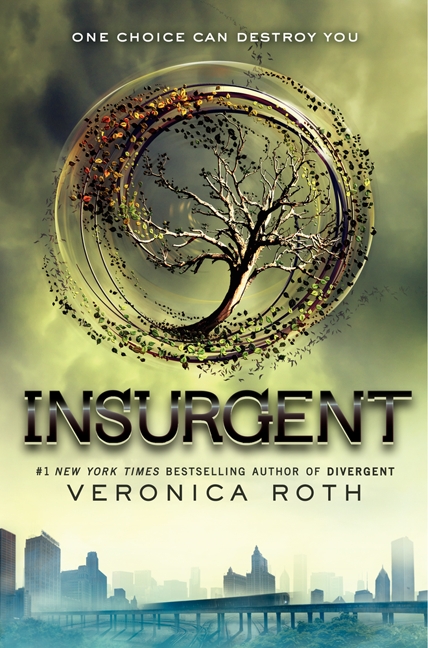 |
| ...TO THIS! |
Tuesday, April 5, 2011
A sneak peek
I'm saving my editorial love story about Veronica Roth's Divergent until the book comes out next month (on May 3rd! Mark your calendars, or better yet, place your pre-orders!)
But in the meanwhile, since May 3rd seems way too far away right now . . . how about a teaser? You can read the first 100 or so pages of Divergent by clicking on the "Browse Inside" option below:
But in the meanwhile, since May 3rd seems way too far away right now . . . how about a teaser? You can read the first 100 or so pages of Divergent by clicking on the "Browse Inside" option below:
Saturday, February 19, 2011
These are the days to remember*
Today I found this short film (via my pal Storybird), and really, you must stop everything and watch it. It's four minutes and three seconds of pure wonderfulness. Or, as you might also care to see it, it's essentially the heart of many a contemporary YA novel, in under five minutes.
YOUTH from Tommy Petroni on Vimeo.
Sometimes I get reflective, as writerly (and editorly!) types do, and I start poking through my life, looking for connections, because connectivity is a theme that matters a lot to me. And sometimes, like with this video, I just stumble upon the connection, unexpectedly and all in a lovely flash.
As I think I've occasionally mentioned on this blog, before I was an editor, I was a youth minister who worked with teens all across the U.S. and Canada. It was a very different life than the one I have now, but the core is surprisingly the same. And that's a truth I realize again and again, as I uncover the elements that bridge the two: Like building relationships. And helping others to grow and believe. And searching out the heart of what matters. And watching people transform because of the possibilities that they've opened themselves up to. And offering and sharing in no-holds-barred honesty. And most of all, at the core of both are the moments of becoming, like those captured in this video--the moments that are both ordinary and wondrous, the incredible friendships (and betrayals) that shape us, the memories and choices that become indelible part of who we are. Because being a teenager is one of the most powerful, profound, epic, meaningful experiences we'll ever have, as human beings.
I loved working with teens. And I love creating books for them now. Watching this video helps me to remember that: though it's writers and artists and agents and other grown-up publishing folk that I work with most closely now, it's still the readers, the teens and tweens and wee little kiddos, that I'm truly doing it for. The days when we can all remember that--that the books and stories we create are for them, most of all--those are the days when I think we can call this industry its most successful. And I'm so proud and lucky to be a part of it.
Thanks, sixteen-year-old Tommy Petroni, for reminding me.
*Yes, that line, and everything else about this post, also reminds me of this song, which was totally a part of the soundtrack to my own teen years. Anyone else make the mental link between the two?
YOUTH from Tommy Petroni on Vimeo.
Sometimes I get reflective, as writerly (and editorly!) types do, and I start poking through my life, looking for connections, because connectivity is a theme that matters a lot to me. And sometimes, like with this video, I just stumble upon the connection, unexpectedly and all in a lovely flash.
As I think I've occasionally mentioned on this blog, before I was an editor, I was a youth minister who worked with teens all across the U.S. and Canada. It was a very different life than the one I have now, but the core is surprisingly the same. And that's a truth I realize again and again, as I uncover the elements that bridge the two: Like building relationships. And helping others to grow and believe. And searching out the heart of what matters. And watching people transform because of the possibilities that they've opened themselves up to. And offering and sharing in no-holds-barred honesty. And most of all, at the core of both are the moments of becoming, like those captured in this video--the moments that are both ordinary and wondrous, the incredible friendships (and betrayals) that shape us, the memories and choices that become indelible part of who we are. Because being a teenager is one of the most powerful, profound, epic, meaningful experiences we'll ever have, as human beings.
I loved working with teens. And I love creating books for them now. Watching this video helps me to remember that: though it's writers and artists and agents and other grown-up publishing folk that I work with most closely now, it's still the readers, the teens and tweens and wee little kiddos, that I'm truly doing it for. The days when we can all remember that--that the books and stories we create are for them, most of all--those are the days when I think we can call this industry its most successful. And I'm so proud and lucky to be a part of it.
Thanks, sixteen-year-old Tommy Petroni, for reminding me.
*Yes, that line, and everything else about this post, also reminds me of this song, which was totally a part of the soundtrack to my own teen years. Anyone else make the mental link between the two?
Sunday, January 30, 2011
Hooray for new books!
I read a fantastic book recently! In fact, it was so good, I read it twice within just a few short weeks. I'm planning to read it many more times, actually. And give it just a little while (till, oh, say, tentatively 2012 or so), and you can read it, too.
Curious?
From PublishersMarketplace: "S.J. Kincaid's INSIGNIA, in which a teenage video gamer becomes a government weapon in a futuristic world at war, to Molly O'Neill at Katherine Tegen Books, in in pre-empt, in a significant deal, in a three-book deal, by David Dunton at Harvey Klinger."
In the meantime, while I get busy editing, head on over to the author's blog to read a truly inspiring tale of one writer's growth and perseverance.
Friday, May 21, 2010
CONTEST!!!, Or, Janet Reid is Sneaky and You Stand to Benefit.
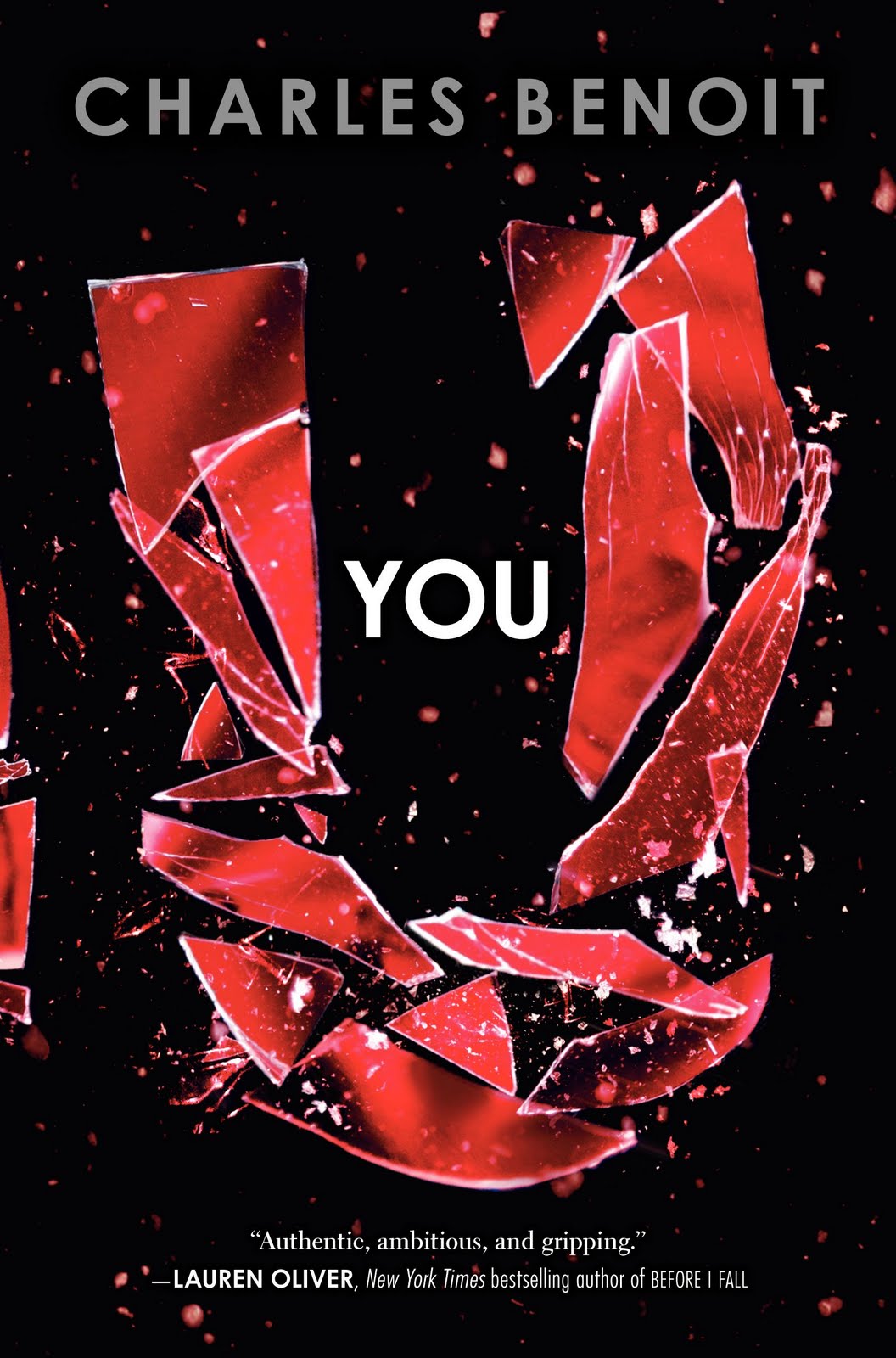 If you've met me at a publishing event in the last 15 months or so, or if you follow me on Twitter, or if you're my friend on Facebook, you've probably heard me talking about this book, YOU, the debut YA from Charles Benoit.
YOU is without a doubt one of the most important books I'll have a part in bringing to life in my entire career, no matter how long that career turns out to be. There aren't enough adjectives to describe how masterfully crafted Charles Benoit's story is, and how excited we are that he's found his way from the adult mystery world into writing YA. And working beside my amazing boss on YOU has been a phenomenal experience--15 months after our first reads of it, we're still unable to stop ourselves from talking about it near-constantly. Most of all, the support of the children's/YA writing world for this new-to-our-world author and his story has been inmmensely humbling. The ARC, in fact, looks like this:

It's gotten more early praise than we could even fit on the cover! As we like to say, "People are talking about YOU." (And yes, you really should click each of those links to read the fantastic reviews and conversations that are starting about this book.)
So why am I showing you the ARC? Because you have a chance to win it. Head over to Agent Janet Reid's blog, where she's doing the Robin Hood thing of snitching ARCs and giving them to the masses, ergo YOU stand to benefit. But hurry! The contest ends at high noon on Sunday.
And then on August 24th (a mere 96 days from now!) get yourself to a bookstore and buy this astonishing book (or, you know, go pre-order it right now in anticipation), and read it and share it with everyone you know who works with teens, or is a teen, or has ever been a teen. And then you, too, will be one of the many people talking about YOU.
Wednesday, March 24, 2010
Why I Work in Publishing (in brief)
There are a million reasons I could tell you. Catch me in person some time, in fact, and you'll be hard-pressed to avoid me telling you some of them, probably whether you've even asked or not! ;) In fact, maybe "Why I Work in Publishing" should become a regular feature on this blog.
But for now, as the simplest answer to that question, I'll point to this. Reviews like this--heartfelt responses from readers like this--are why I work in publishing, and specifically, why I work in children's/YA books. Because I get to help make books that carry this much power, for readers of every age. Because stories become a part of us and stay with us forever and shape the person we become in the world and the mark we choose to leave on it. Because the things a writer has to say, and the words s/he crafts, can become black marks on white paper (or the technological equivalent thereof) that just might make someone else want to become a better person. And I get to help make all of that happen.
Does there need to be any other reason?
But for now, as the simplest answer to that question, I'll point to this. Reviews like this--heartfelt responses from readers like this--are why I work in publishing, and specifically, why I work in children's/YA books. Because I get to help make books that carry this much power, for readers of every age. Because stories become a part of us and stay with us forever and shape the person we become in the world and the mark we choose to leave on it. Because the things a writer has to say, and the words s/he crafts, can become black marks on white paper (or the technological equivalent thereof) that just might make someone else want to become a better person. And I get to help make all of that happen.
Does there need to be any other reason?
Monday, February 15, 2010
A Conversation on Resonance & Responsibility
Resonance and connectivity are things that I look for a lot as an editor, things that I ask writers to pursue in their storytelling, urging them to open up their stories as wide as possible. Doing so can lead to one of the most powerful kinds of writing, in my mind: when a book reaches beyond merely telling about a particular set of characters, and becomes a story that echoes as familiar and personal and true in the hearts and minds of all different kinds of readers. If, as creators of stories, we recognize and believe that stories are what connect us, then of course that potential for deep connection is one we want to make the most of, right? And if we're lucky, the connections do, in fact, emerge: between readers and characters, between readers and their classmates/friends/family members/fellow humans, and sometimes between readers and authors, too.
But what happens, once the connection is made? Do we talk enough--or at all--about what that can mean, especially for writers of deeply resonant and real (but also sometimes deeply painful) stories?
We talk a lot about "responsibility" in children's and YA books, and one of the fascinating things about that word is that, like any word, it means something different to different people. To some, it means militant safe-guarding of young readers from stories that may, ultimately, shape them, even in the slightest of ways, into a different person than they were previously. But to most of us working in publishing, whether as writers or industry folk, "responsibility," especially in the context of YA, usually translates best to "honesty."
Most of us remember what it was like to be a teen, and we know teens today, too. And the truth is, growing up is (still) hard, and (still) confusing, and it isn't always safe, and sometimes it's positively cruel, but every teen has to stumble through it somehow. And if there are books that might help him/her do so with a little more certainty or a little less loneliness, so much the better. In a way, it means we're all in this together: authors and agents, editors and publishers, librarians and teachers, with all the other invisible walls between our linked-but-separate professions broken down. We're all in it together for every single teen who might, just might, reach for a book while seeking to answer some variation of the questions that we still remember asking ourselves: How, exactly, do we learn to grow up? To become human? To survive the turbulent mess of fears and glories and heartbreaks and changes that any kind of significant becoming entails? To find out which things actually matter, to understand what part of everything is true?
My Jesuit university extolled an ideal that's at the heart of their mission/philosophy of education, and that ended up at the heart of me, too: cura personalis, or "care for the whole person." In other words, it's not enough to care for or feed a person physically, you must also look after his/her unique emotional, spiritual, and mental needs and hungers, too; we must offer a deep respect for everything that makes a person human. In this way, we can help others--and ourselves--them grow, by refusing to segment a person into only the elements we might feel comfortable seeing. Ultimately, if reaching outward, you cannot only give attention to singular aspects of a person's full humanity, or you have failed to truly care for them after all. It's a philosophy that I think can offer a deeper meaning to, but demand a deeper responsibility from, any profession: from doctors to social workers to teachers to writers of books for teens. Because we do care for those we encounter, and deeply: writers care for the teens who will read their books, and editors care for those teens, too--and also for the authors, caught somewhere in the middle of this chain of connectivity.
Which brings me to the question that Janet Reid is asking on her blog today. It's not a question that I have any answer to (would that I did!) but I agree with her that it's an important one for all of us to weigh, and to think about in terms of today's social media-driven world. What happens when a teen does find a story that speaks to him/her powerfully, and that book becomes a lifeline--when a reader reaches out, believing the author has the answers he/she is seeking, or wanting a continuation of what felt like a deeply personal connection? And then in turn, what's an author to do when that same sense of immediacy that we extol in writing for teens comes through in a reader's communications--when they email/blog comment/Facebook message/MySpace post/Tweet/etc, etc. an author offering their own story, brimming with vulnerability and then desperately--or even just hopefully--await an answer, a meaningful response, a deeper connection, a promise that there's a way past whatever moment they're in the midst of living? And how does an author begin to shoulder that responsibility, that hunger, that need on the part of readers, somewhere in the midst of the other work of being a writer?
Media is so often blamed when things go wrong in the lives of damaged, hurting, unhappy, teens. We blame tragedies on the influence of violent video games and movies; we blame magazines for encouraging hopelessly unrealistic self-images. In the resoundingly opposite direction, it's long been the stance of children's/YA book folks that the greatest thing we can--and do!--offer to teens is hope, in the form of stories. But social media has changed--or at least, slightly shifted--so many other aspects of publishing that I guess we shouldn't be surprised that it's changed the author-reader relationship in some regards, too. And I don't think that new-media-heightened hope for connection is an aspect of the job that a writer can simply chose to turn away from and ignore--I don't think writers of books for teens would choose to do that, or I don't think they'd bother writing for teens at all. So somehow, it seems that a writer's job isn't just to serve words and stories and characters anymore--it's also to serve the searching/freely-sharing/sometimes-broken readers who come barreling, virtually, into their in-boxes. And for writers, that fact is powerful and beautiful and utterly overwheming, all at once, or so I suspect.
So what's the next step? It's a two-pronged query, I think: one set of answers may spell out some ways writers can best respond to teens who, though virtual strangers, are craving connection in a way that validates/orients/respects/sometimes even rescues them. But the other part both precedes and follows that, and it's for all of us: How do we (agents, editors, publishers, fellow writers, booksellers, educators, and the children's publishing community as a whole) equip writers to receive the stream of stories teens offer in return for the books they've just read?
It's a big question. I welcome your thoughts.
But what happens, once the connection is made? Do we talk enough--or at all--about what that can mean, especially for writers of deeply resonant and real (but also sometimes deeply painful) stories?
We talk a lot about "responsibility" in children's and YA books, and one of the fascinating things about that word is that, like any word, it means something different to different people. To some, it means militant safe-guarding of young readers from stories that may, ultimately, shape them, even in the slightest of ways, into a different person than they were previously. But to most of us working in publishing, whether as writers or industry folk, "responsibility," especially in the context of YA, usually translates best to "honesty."
Most of us remember what it was like to be a teen, and we know teens today, too. And the truth is, growing up is (still) hard, and (still) confusing, and it isn't always safe, and sometimes it's positively cruel, but every teen has to stumble through it somehow. And if there are books that might help him/her do so with a little more certainty or a little less loneliness, so much the better. In a way, it means we're all in this together: authors and agents, editors and publishers, librarians and teachers, with all the other invisible walls between our linked-but-separate professions broken down. We're all in it together for every single teen who might, just might, reach for a book while seeking to answer some variation of the questions that we still remember asking ourselves: How, exactly, do we learn to grow up? To become human? To survive the turbulent mess of fears and glories and heartbreaks and changes that any kind of significant becoming entails? To find out which things actually matter, to understand what part of everything is true?
My Jesuit university extolled an ideal that's at the heart of their mission/philosophy of education, and that ended up at the heart of me, too: cura personalis, or "care for the whole person." In other words, it's not enough to care for or feed a person physically, you must also look after his/her unique emotional, spiritual, and mental needs and hungers, too; we must offer a deep respect for everything that makes a person human. In this way, we can help others--and ourselves--them grow, by refusing to segment a person into only the elements we might feel comfortable seeing. Ultimately, if reaching outward, you cannot only give attention to singular aspects of a person's full humanity, or you have failed to truly care for them after all. It's a philosophy that I think can offer a deeper meaning to, but demand a deeper responsibility from, any profession: from doctors to social workers to teachers to writers of books for teens. Because we do care for those we encounter, and deeply: writers care for the teens who will read their books, and editors care for those teens, too--and also for the authors, caught somewhere in the middle of this chain of connectivity.
Which brings me to the question that Janet Reid is asking on her blog today. It's not a question that I have any answer to (would that I did!) but I agree with her that it's an important one for all of us to weigh, and to think about in terms of today's social media-driven world. What happens when a teen does find a story that speaks to him/her powerfully, and that book becomes a lifeline--when a reader reaches out, believing the author has the answers he/she is seeking, or wanting a continuation of what felt like a deeply personal connection? And then in turn, what's an author to do when that same sense of immediacy that we extol in writing for teens comes through in a reader's communications--when they email/blog comment/Facebook message/MySpace post/Tweet/etc, etc. an author offering their own story, brimming with vulnerability and then desperately--or even just hopefully--await an answer, a meaningful response, a deeper connection, a promise that there's a way past whatever moment they're in the midst of living? And how does an author begin to shoulder that responsibility, that hunger, that need on the part of readers, somewhere in the midst of the other work of being a writer?
Media is so often blamed when things go wrong in the lives of damaged, hurting, unhappy, teens. We blame tragedies on the influence of violent video games and movies; we blame magazines for encouraging hopelessly unrealistic self-images. In the resoundingly opposite direction, it's long been the stance of children's/YA book folks that the greatest thing we can--and do!--offer to teens is hope, in the form of stories. But social media has changed--or at least, slightly shifted--so many other aspects of publishing that I guess we shouldn't be surprised that it's changed the author-reader relationship in some regards, too. And I don't think that new-media-heightened hope for connection is an aspect of the job that a writer can simply chose to turn away from and ignore--I don't think writers of books for teens would choose to do that, or I don't think they'd bother writing for teens at all. So somehow, it seems that a writer's job isn't just to serve words and stories and characters anymore--it's also to serve the searching/freely-sharing/sometimes-broken readers who come barreling, virtually, into their in-boxes. And for writers, that fact is powerful and beautiful and utterly overwheming, all at once, or so I suspect.
So what's the next step? It's a two-pronged query, I think: one set of answers may spell out some ways writers can best respond to teens who, though virtual strangers, are craving connection in a way that validates/orients/respects/sometimes even rescues them. But the other part both precedes and follows that, and it's for all of us: How do we (agents, editors, publishers, fellow writers, booksellers, educators, and the children's publishing community as a whole) equip writers to receive the stream of stories teens offer in return for the books they've just read?
It's a big question. I welcome your thoughts.
Monday, May 18, 2009
You may not be able to look at me the same way once I admit this...
Last week, I did something I haven't done in a long time. I cheated. An editor friend recently hooked me up with a much-coveted advanced readers copy of Once Was Lost, the third novel by Sara Zarr, a writer who repeatedly blows me away with the emotional richness of her stories. But alas, as much as I've been waiting and waiting for that ARC, it came at the worst possible time. May has been a crazy-busy month. I totally did not have time to read anything that wasn't a manuscript. And yet I totally couldn't wait any longer and NOT read it. So I dove in. And...it was as great as I expected (isn't it wonderful when an author doesn't let you down as a reader, not even for a minute?). Rich, nuanced, totally human characters that I thoroughly believed in. Deep ideas about questions that don't have easy answers. Complex, REAL, confusingly muddled relationships and situations that made me ache. I think that's what I love about Zarr's writing--she writes thoughtfully about stories and characters that feel so very honest and alive.
But you're waiting for the confession, aren't you? So here it is. Once Was Lost is also totally full of suspense. And I had a limited amount of time, and really needed to be spending some of it sleeping, instead of reading past 2 a.m. So I skipped to the end to find out what happened. I've since finished it for real, and I don't think the reading experience was too scarred by my late-night, non-linear bout of weakness--in fact, I think I could even claim that it's a compliment to Sara Zarr that I HAD to know what happened before I could fall asleep. But, tell me I'm not the only one who sometimes does this? And, hey, guilt loves company--what's the last book that made *you* cheat?
But you're waiting for the confession, aren't you? So here it is. Once Was Lost is also totally full of suspense. And I had a limited amount of time, and really needed to be spending some of it sleeping, instead of reading past 2 a.m. So I skipped to the end to find out what happened. I've since finished it for real, and I don't think the reading experience was too scarred by my late-night, non-linear bout of weakness--in fact, I think I could even claim that it's a compliment to Sara Zarr that I HAD to know what happened before I could fall asleep. But, tell me I'm not the only one who sometimes does this? And, hey, guilt loves company--what's the last book that made *you* cheat?
Sunday, May 3, 2009
The Great American (YA) Novel

My friend Mark is an an aspiring writer who mostly focuses on adult fiction, though he seems to flirt with the thought, as many do, of writing for kids someday--perhaps because has several young-readers-in-the-making of his own. He occasionally tosses astute questions out at me about the kidlit world as he reads and writes and thinks about the writing life, and I've actually been chewing on one of these queries for weeks, because, well, there's a lot to ponder packed into it. In his own words:
"The Great American YA Novel: In your opinion, has it already been written? If so, which one is it? If not, what would it look like? Discuss."
My first reaction was to think, "Yes, of course it's been written! Need you even ask?! We're living in the Golden Age of YA, after all!" But the second piece of that question gets far trickier--which one is it? Of course dozens of books jumble into my mind, one after the other--award-winners, and personal faves--contemporary, historical, fantastical.... There is certainly a growing canon of universally- acknowledged great YA out there these days, and we could no doubt have a rich discussion about what should top that list (in fact, this is your invitation to duke it out in the comments, if you'd like).
But it's actually the next piece of the question--what would or what does the Great American YA novel look like?--that got me thinking even deeper than titles and authors and books that carry shiny awards stickers.
We (and by we, I mean the tribe of English majors to which I suppose I belong, having written altogether-too-many college papers on Milton and Shakespeare and The Great Gatsby and Sophie's Choice and 20th-century this and postmodern that) usually call adult literature great because of aesthetics and symbolism and critical acclaim and technical brilliance and etc., and because we can categorize and classify and rationalize and argue and footnote it all.
But young adult literature's greatness comes from a place that is often just as aesthetically and technically brilliant, but also far more emotional, I think. And perhaps this is why I love it far more than the many Great Works of Literature I read in college. (Apologies on that count to all those English professors of mine--but hey, at least I ended up with an English major sort of job, right?)
Part of being a young adult is by nature, I think, to be a bit self-focused. You're beginning to truly claim (and also reject) the defining pieces of your world and your SELF for the first time: your future, your family, your friends, your relationships, your truths, your ambitions/dreams/beliefs/hopes/ideals, your joyous/painful discoveries, your life. With so many things already in fragile balance, it takes something fairly significant to tap through that wall of self-absorption and demand attention . . . to affect the person a young adult is, and is becoming. But the brilliant power of books is such that, sometimes, they can do just that. They can validate, they can challenge, they can inspire . . . they can make a reader pause and redefine the world they've known up until that moment. And when they do any of those things, it's that book, whatever it may be, that becomes The Great American YA Novel for that reader. And so The Great American YA Novel is constantly changing. Because young adults are constantly changing, constantly growing, and the novels they claim as great--because they are full of words and characters and truths that affect and shape them--change and grow with them.
So, Mark, that's my long-delayed answer, I think: what matters most in YA is not the labels scholars give, but rather, the labels that readers give. What matters is that, actually, every YA novel published has the potential to be considered The Great American YA novel in the mind of the teens who will read it.
Treatise now complete, I'd love to hear how other people would answer this question, so please chime in with your thoughts in the comments!
Subscribe to:
Posts (Atom)